Park City Buyer Leverage 2026: How 47 Days on Market Creates Negotiation Power
Park City Buyer Leverage: How 47 Days on Market Creates Real Negotiation Power
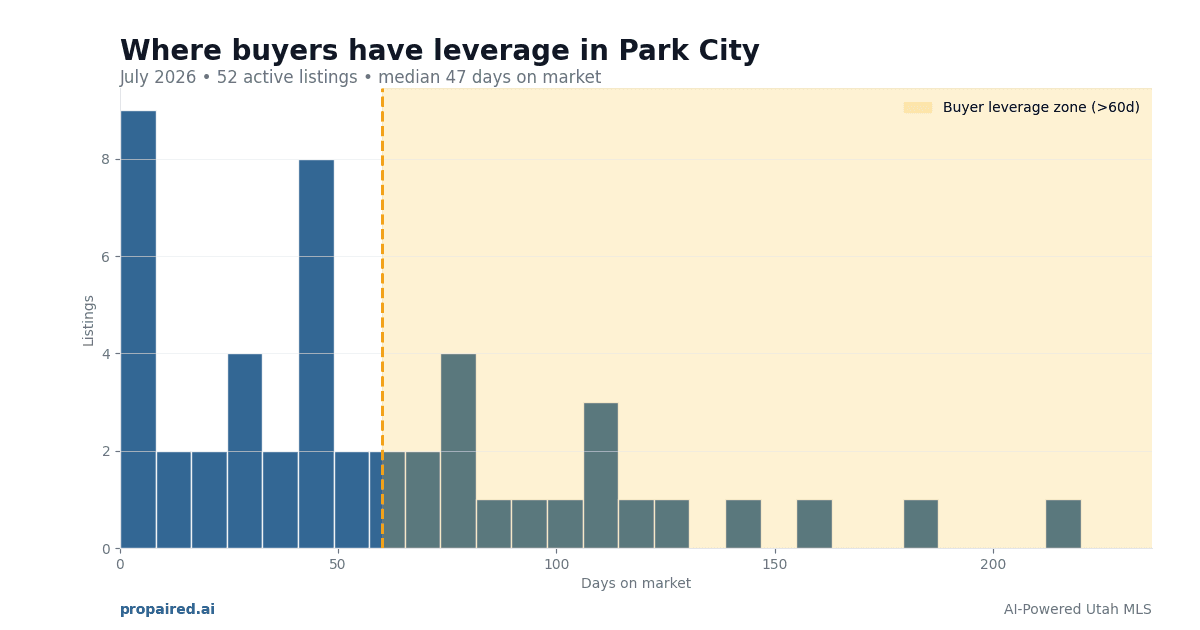
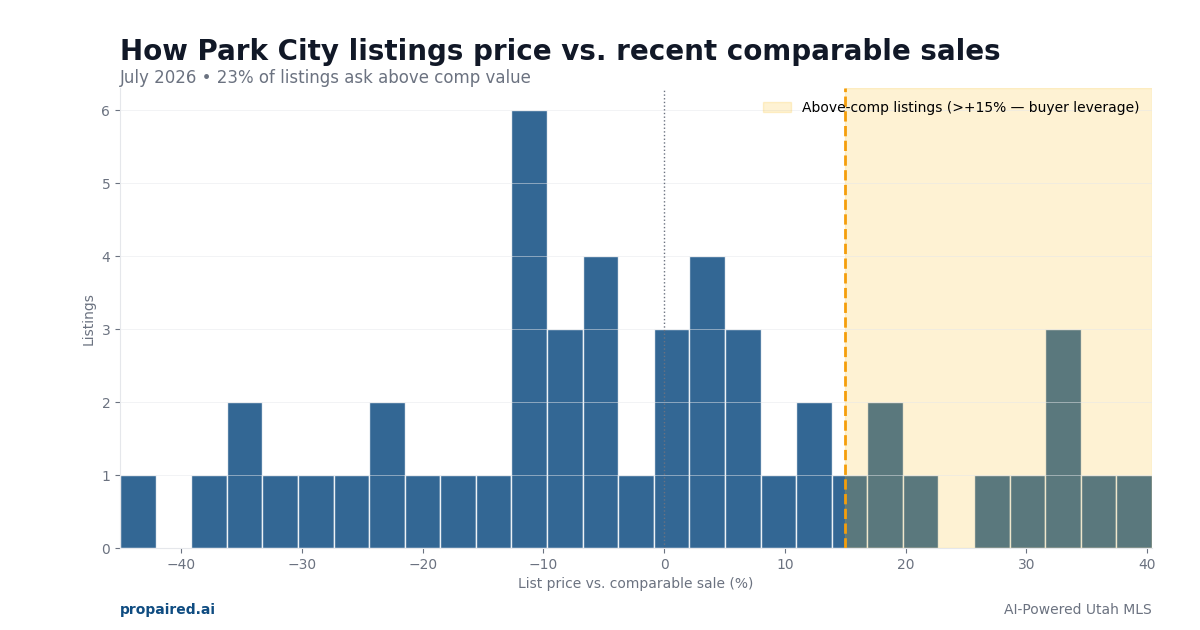
Park City's real estate market is telling a clear story right now: buyers have meaningful leverage, and smart negotiators are using it. With a median 47 days on market and 44% of listings sitting beyond 60 days, this isn't the frenzied seller's market we've seen in recent years. More telling? Nearly 23% of current listings are priced above what comparable sales actually support. For Utah buyers working with experienced agents, these numbers translate to real negotiation opportunities — if you know where to look and how to move.
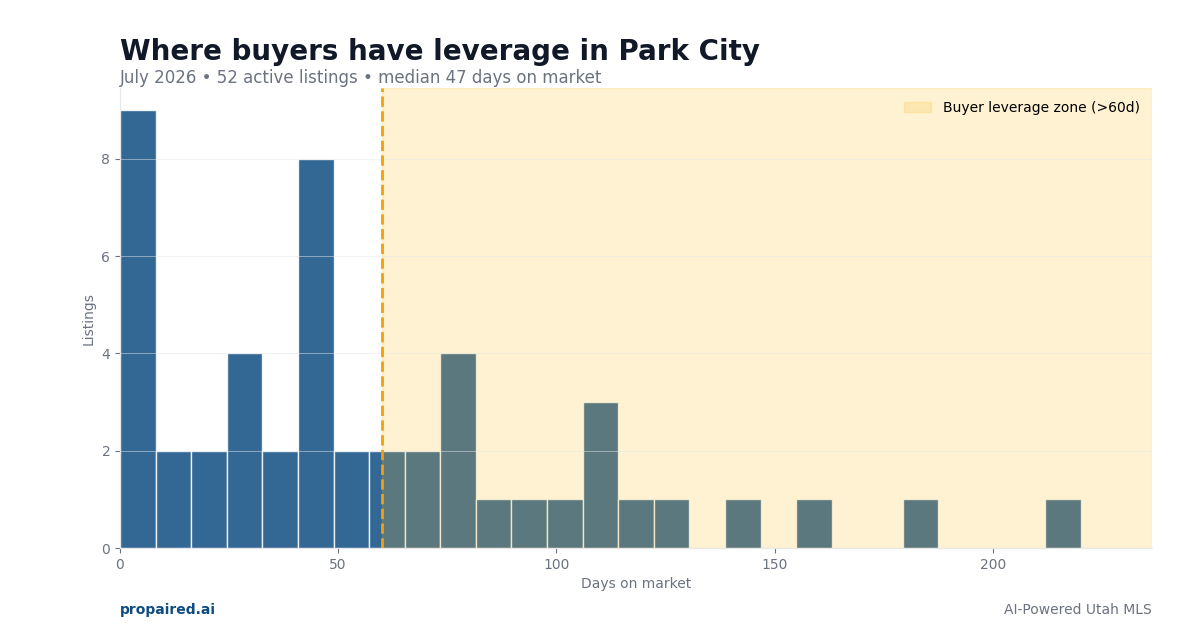
Listings beyond ~60 days are buyer-leverage candidates in Park City.
The Days-on-Market Advantage: Your Primary Negotiation Lever
When properties sit on the market for 47 days at the median — with some stretching to 96 days at the 75th percentile and 161 days at the 90th — sellers start feeling pressure. This isn't speculation; it's mathematics. Every additional week a property remains unsold costs sellers money in carrying costs, opportunity costs, and psychological stress.
Our market-trend analysis shows that listings beyond the 60-day mark (currently 44% of Park City inventory) represent the strongest negotiation targets. These sellers have already absorbed the reality that their initial pricing strategy didn't work. They're motivated, and motivation creates leverage for prepared buyers.
The key is identifying which long-term listings represent genuine value versus properties that are simply overpriced for fundamental reasons. Properties that have been on market for 60+ days but show strong comparable sales support often indicate sellers who started too high but own genuinely desirable assets.
Reading the Market Signals
Look for listings that have had price reductions but still show strong underlying value metrics. Our automated valuation engine identifies properties where the list-to-comparable gap has narrowed significantly from initial listing. These represent sellers who are learning to price realistically while still owning quality assets.
Timing Your Approach
The sweet spot for negotiation often hits around day 45-60. Sellers have moved past initial optimism but haven't yet reached desperation pricing. This is when experienced buyers can negotiate from strength while still securing properties with solid fundamentals.
The Comparable Sales Gap: Where Overpricing Creates Opportunity
Nearly one in four Park City listings is currently asking above what recent comparable sales support. The median gap sits at -4.0% (meaning most listings are reasonably priced), but the top decile shows properties priced +32.2% above comps. This spread creates a clear roadmap for buyer strategy.
Properties in that top decile aren't necessarily bad investments — they're often excellent properties with sellers who haven't adjusted to current market realities. The Deseret News recently noted that rising mortgage rates, now at 6.51% for 30-year fixed loans, are impacting buyer purchasing power across Utah. This rate environment makes overpriced listings even more vulnerable to negotiation.
Our comparable-sales engine tracks not just final sale prices but time-to-contract and negotiation patterns. Properties that started significantly above comps but have strong underlying metrics often see the most dramatic price adjustments once sellers recognize market conditions.
Identifying Value in Overpriced Listings
Focus on properties where the list-to-comp gap exceeds 15% but the underlying asset quality remains strong. These often represent sellers who priced based on peak market conditions rather than current comparable sales. The gap creates negotiation room while the quality ensures long-term value.
Leveraging Financing Reality
With mortgage rates at 6.51%, buyers can legitimately argue that financing costs have changed the affordability equation since many listings first hit the market. This isn't a negotiation tactic — it's mathematical reality that affects what buyers can actually pay.
Listings asking more than ~7% above recent comparable sales in Park City.
Market Context: Why This Leverage Exists Now
Park City's current buyer leverage didn't emerge in a vacuum. The Park City Chamber/Bureau recently cited economic softness due to an early end to the ski season and broader economic headwinds. This seasonal disruption, combined with the broader rate environment, has created a more measured market.
Interestingly, recent analysis of the Park City condo market clarified that apparent sales drops were largely due to a one-time inventory surge in Deer Crest rather than fundamental demand weakness. This suggests underlying buyer interest remains strong — the leverage exists because of pricing and timing mismatches, not lack of demand.
The development pipeline also supports buyer leverage. The new Four Seasons Resort and Residences rising in Deer Valley's East Village represents the first new luxury ski village in North America in over 40 years. While this signals long-term confidence in Park City, it also means increased future supply, giving current buyers more negotiation power with existing inventory.
With only 52 active listings currently available, inventory remains relatively tight. But the combination of extended days on market and pricing gaps means quality is available for buyers who negotiate strategically.
Seasonal and Economic Factors
The early ski season end created a shorter peak selling window, leaving some sellers who missed optimal timing now facing a longer marketing period. This seasonal disruption, combined with broader economic uncertainty, has shifted negotiation dynamics in buyers' favor.
Future Supply Considerations
Major developments like the Four Seasons project signal confidence but also future competition for current listings. Sellers aware of upcoming luxury inventory may be more motivated to close deals now rather than compete with new construction later.
Strategic Moves: Converting Leverage into Results
Leverage without strategy is just market data. Converting Park City's current conditions into actual negotiation wins requires specific moves that experienced Utah agents understand.
Start with properties showing clear comparable sales gaps but strong underlying metrics. Our analysis shows the median achievable seller uplift for properly priced and staged properties is currently $0 — meaning properties that haven't captured this optimization represent immediate negotiation opportunities.
Focus on listings beyond 45 days on market where sellers have already made one price reduction. This indicates motivated sellers who understand market reality but may still have room to move. The key is presenting offers that reflect both current comparable sales and financing realities.
For properties in the 60+ day category, consider offers that account for carrying costs the seller has already absorbed. A property that's been on market for 90 days has cost the seller roughly 2-3 months of mortgage, taxes, and maintenance — costs that create real motivation to close.
Offer Strategy for Extended Listings
Structure offers that acknowledge time on market without being insulting. For properties beyond 60 days, offers at 5-8% below asking (assuming reasonable initial pricing) often generate serious consideration. Include escalation clauses that show good faith while maintaining negotiation room.
Financing and Inspection Leverage
Use current rate environments and thorough inspections as legitimate negotiation points. Properties that have been on market during rate increases face real affordability challenges that justify price discussions. Inspection findings on older listings often reveal deferred maintenance that creates additional negotiation opportunities.
Park City's current market offers genuine buyer leverage for those who understand how to use it. The combination of 47-day median market times, 23% of listings priced above comparable sales, and broader economic factors creates negotiation opportunities that haven't existed in recent years.
The key is moving strategically rather than opportunistically. Focus on properties with strong fundamentals but pricing or timing challenges. Work with agents who understand both the data and the negotiation dynamics it creates. And remember — leverage is temporary. Market conditions change, but well-negotiated purchases in quality locations tend to work out regardless of short-term fluctuations.
For Utah buyers ready to act, Park City's current conditions offer a window of opportunity that combines genuine value with negotiation power. The question isn't whether leverage exists — it's whether you're positioned to use it effectively.
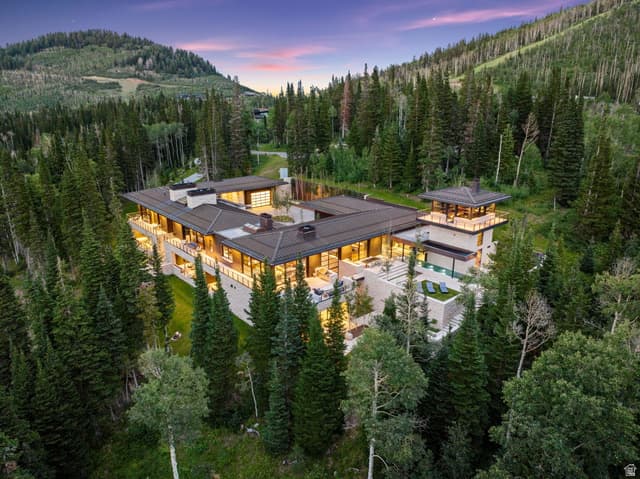
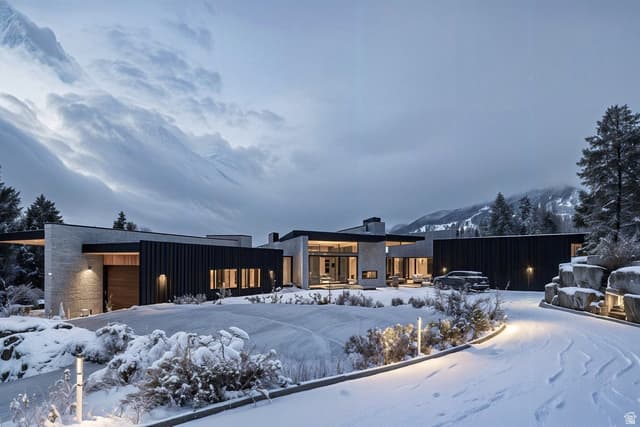
Three current Park City listings worth a closer look




Where Park City stands right now
Related news
Comments
Sign in to leave a comment.
