Salt Lake City Buyer Leverage 2026: Where Utah Buyers Can Negotiate Hard
Salt Lake City Buyer Leverage: Where to Negotiate Hard in Utah's Shifting Market
Salt Lake City's real estate market is giving buyers more negotiating power than we've seen in years. With 22% of listings priced above what comparable sales support and homes sitting on the market for a median of 17 days, smart buyers are finding opportunities to negotiate meaningful savings. The key is knowing where to look and how to leverage the data that sellers hope you won't notice.
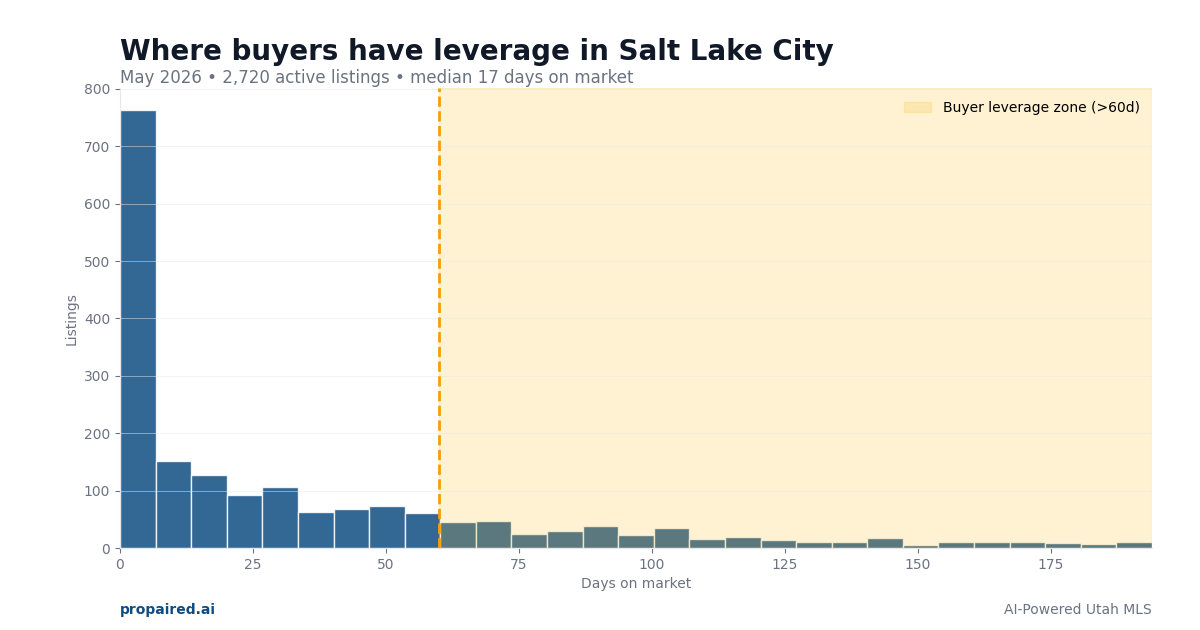
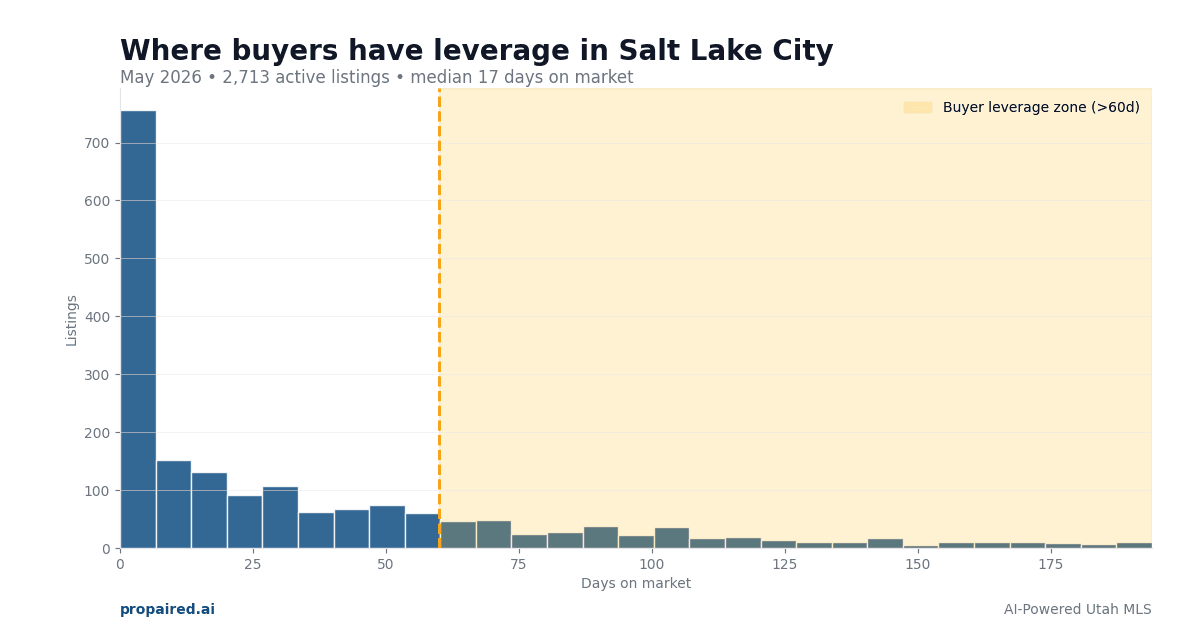
Listings beyond ~60 days are buyer-leverage candidates in Salt Lake City.
The Numbers That Matter: Salt Lake City's Current Market Reality
Let's cut through the noise and look at what's actually happening in Salt Lake City right now. With 2,713 active listings on the market, buyers have more options than they've had in recent memory. But the real leverage comes from understanding the quality of that inventory.
Our market-trend model shows that 22% of current listings are asking prices above what recent comparable sales support. The median gap between asking price and supported value sits at +4.0%, but the top decile of overpriced homes are asking +24.1% more than comps justify.
Even more telling: 22% of listings have been on the market for more than 60 days. AOL reported in February that selling times in Salt Lake City vary significantly based on market balance, and right now that balance is shifting toward buyers. When you see a home that's been sitting for two months or more, that's a seller who's likely ready to negotiate.
Days on Market: Your Negotiation Timeline
The median days on market of 17 days tells only part of the story. The 75th percentile sits at 54 days, and the 90th percentile reaches 114 days. This spread means there are two distinct markets operating simultaneously: quick-selling properties priced correctly, and a substantial inventory of homes that sellers are struggling to move.
The Pricing Reality Check
Our automated valuation engine identifies homes where sellers haven't captured the median achievable uplift through proper pricing and staging. In Salt Lake City, that median uplift currently sits at $0 — meaning most correctly priced homes are already at market value. Properties priced above this threshold represent your best negotiation opportunities.
Where Buyers Hold the Cards: Identifying Leverage Opportunities
Not all listings offer the same negotiation potential. The strongest buyer leverage exists where three factors converge: extended market time, pricing above comparable sales, and seller motivation signals.
Look for homes that combine high days on market with significant pricing gaps. A recent analysis from AOL highlighted that western states, including Utah, are seeing home price declines after years of increases. This creates a psychological pressure on sellers who may have listed based on outdated peak pricing.
The most negotiable properties often fall into predictable categories: luxury homes with limited buyer pools, properties with unique features that don't translate to broad market appeal, and homes where sellers have already moved and are carrying two mortgages.
The Sweet Spot: 60+ Days and Overpriced
Properties that have been on the market for more than 60 days while asking above comparable sales represent the strongest buyer leverage. These sellers have typically received feedback from the market that their pricing expectations don't align with buyer willingness to pay. They're often more motivated to negotiate on both price and terms.
Luxury Market Vulnerabilities
High-end properties face particular challenges in Salt Lake City's current market. With fewer qualified buyers and longer decision timelines, luxury sellers often find themselves in extended negotiations. Properties asking significantly above $1 million that have been on the market for months represent substantial negotiation opportunities.
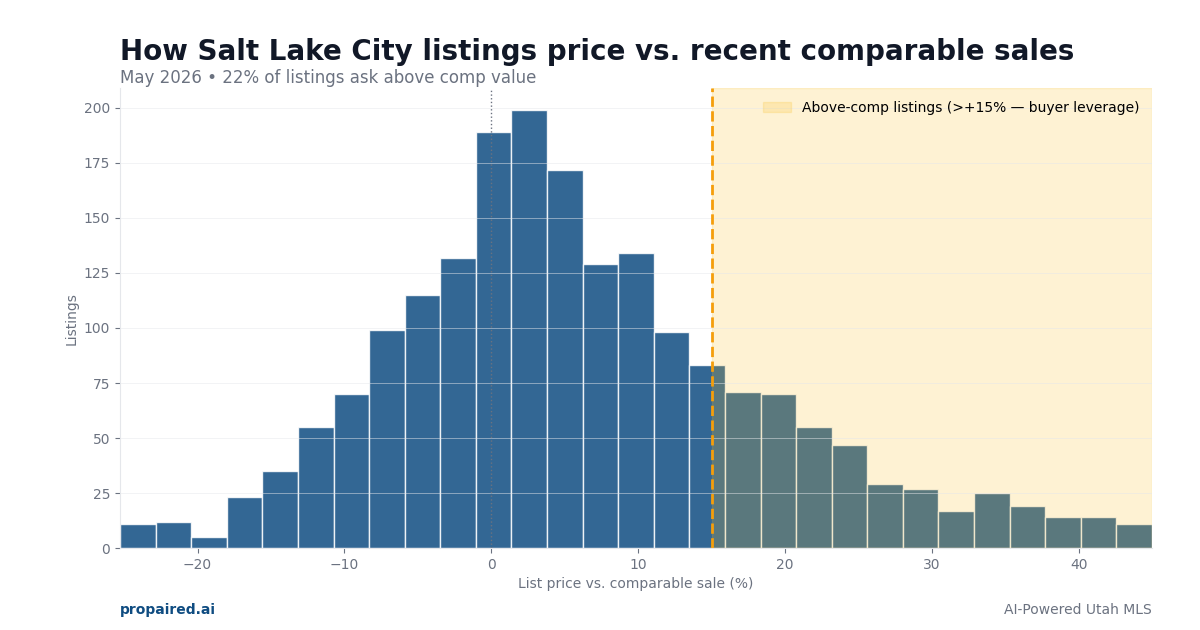
Listings asking more than ~7% above recent comparable sales in Salt Lake City.
Negotiation Strategies That Work in Today's Salt Lake City Market
Armed with market data, buyers can approach negotiations strategically rather than emotionally. The key is presenting offers that acknowledge market realities while giving sellers a path to save face.
Start by researching the property's pricing history and days on market. If a home has been listed for 45+ days at a price that's 10%+ above recent comparable sales, you have legitimate grounds for a significant price reduction request. Frame your offer around market data, not personal budget constraints.
Consider non-price concessions that cost sellers less than they're worth to you. Closing cost assistance, extended inspection periods, or seller-paid warranties can provide value while helping sellers maintain their perceived pricing position.
The Data-Driven Offer Strategy
Present offers that reference specific comparable sales and market timing. When a property has been on the market for 87 days while asking 49% above supported value, your offer should acknowledge this reality. Sellers respect buyers who demonstrate market knowledge rather than making arbitrary lowball offers.
Timing Your Move
Monitor price reductions and market time carefully. The strongest negotiation window often opens 30-45 days after initial listing, when sellers begin to question their pricing strategy but before they've made significant reductions. This is when they're most receptive to reasonable offers that help them avoid further market exposure.
Market Trends Supporting Buyer Leverage
Several broader trends are strengthening buyer positions in Salt Lake City. The city's recent allocation of $8.1 million to fund nearly 600 affordable housing units, as reported by Building Salt Lake, indicates increasing supply-side support that could moderate pricing pressure over time.
Additionally, proposed developments like the 16-story mixed-use tower in Sugar House with 195 residential units suggest that inventory increases are coming. While these units won't hit the market immediately, the anticipation of increased supply can influence current seller behavior.
Utah's first-time home-buying assistance program, despite its limitations, continues to bring new buyers into the market. However, as recent coverage noted, many buyers struggle to find eligible properties, suggesting that the program's impact on pricing may be more limited than initially expected.
Supply Pipeline Implications
New construction and development approvals create psychological pressure on existing home sellers. Even if delivery is months away, the knowledge that more inventory is coming can motivate current sellers to price more aggressively to avoid future competition.
Seasonal Patterns and Buyer Timing
Salt Lake City's market shows distinct seasonal patterns that savvy buyers can exploit. Properties that enter the market in late fall or winter often face reduced buyer competition, giving individual buyers more negotiating power. Combined with current market conditions, this seasonal effect is amplified.
Salt Lake City's current market offers buyers the strongest negotiation position in years, but only for those who understand how to identify and leverage the right opportunities. With 22% of listings sitting above comparable sales values and extended market times becoming common, the data clearly supports aggressive buyer negotiation strategies.
The key is focusing your efforts on properties where sellers have already demonstrated market misjudgment through pricing or timing decisions. These situations create win-win scenarios where buyers achieve meaningful savings while helping sellers move properties that have become market burdens.
Success in this market requires preparation, market knowledge, and the confidence to make data-driven offers. The leverage is there — the question is whether you'll use it effectively.
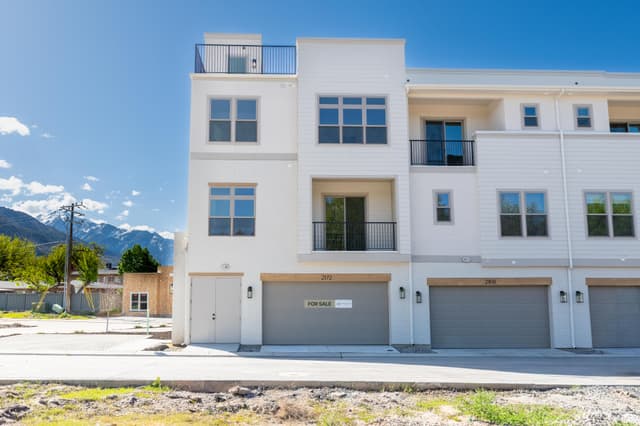
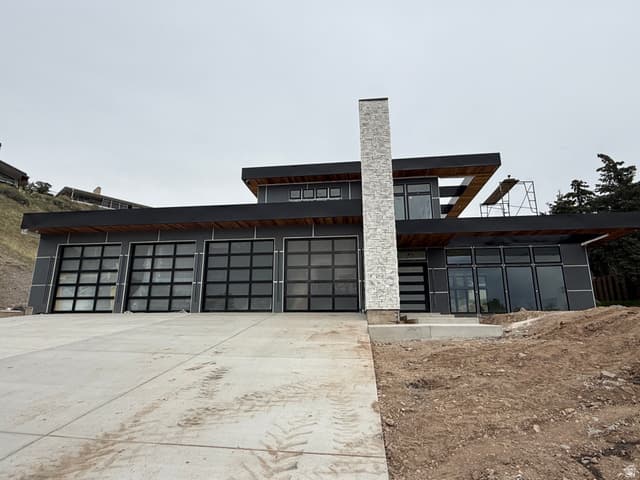
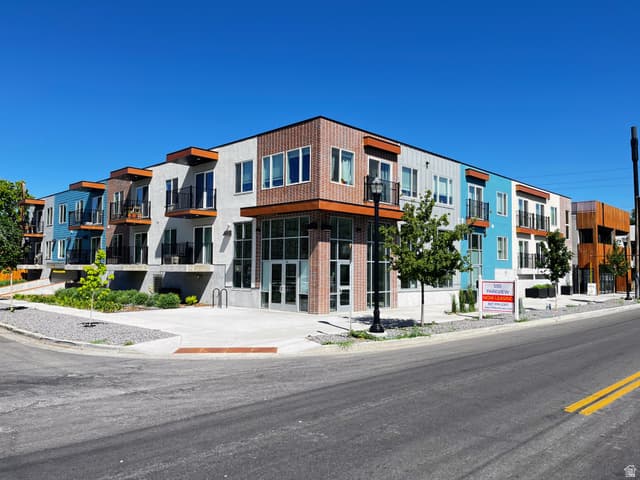
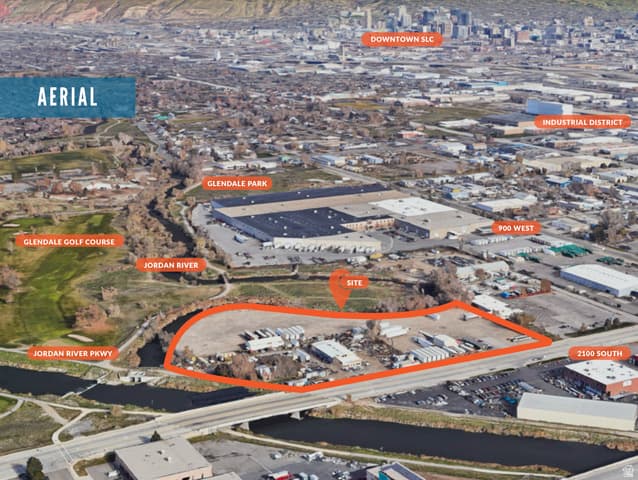
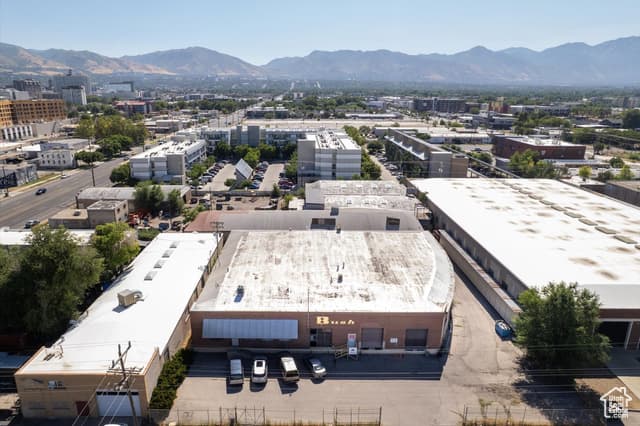
Three current Salt Lake City listings worth a closer look


Where Salt Lake City stands right now
Related news
Comments
Sign in to leave a comment.
